Failure guide
Clogged Nozzle Fix
A clog is a feeding problem you can see: the strand curls, thins, sputters, or stops. Clear the path before changing slicer flow.
Independent third-party notes. Verify firmware, heater, electrical, and vendor-specific work against official documentation for your exact printer.
Start here
Debris, overheated residue, worn nozzle geometry, or an assembly gap is restricting plastic flow.
A clog is a feeding problem you can see: the strand curls, thins, sputters, or stops. Clear the path before changing slicer flow.
- Check first
- Heat to the material temperature and extrude into free air; watch whether the strand exits straight and full-size.
- Change only this
- Clear the nozzle path before changing flow, speed, or extruder tension.
- Verify with
- A free-air extrusion test followed by a short single-wall print.
- Time
- 5 min setup
- Risk
- Caution: hot parts
- Needs purchase
- Maybe, if cleaning fails or the nozzle is worn.
Pick what you see
Pick the Clogged Nozzle Fix branch
Choose the visible evidence or log clue that matches first. The card below keeps the next move to one test and one variable.
Lines are thin, broken, or missing across walls/infill.
- Likely cause
- Partial clog, low temperature, path drag, or volumetric limit.
- First test
- Extrude into free air, then print the single-wall flow box.
- Change only this
- Clear path or lower speed before raising flow.
- Parameter range
- 5 C steps
- Stop when
- Walls become consistent without clicking.
- Verify with
- Free-air strand and wall box.
Pick the exact path
Most failed fixes go wrong when they start from the wrong branch.
Use this when the failure appears on FDM hotends or the closest matching setup.
- First test
- Extrude into free air, then print the single-wall flow box.
- Change only this
- Clear path or lower speed before raising flow.
- Stop when
- The repeat test clearly improves or points to a different branch.
Use this if the symptom started after a nozzle, spool, plate, slicer, firmware, or maintenance change.
- First test
- Restore the last known-good context or isolate only the recent change with one small repeat test.
- Change only this
- Undo or isolate the recent change; do not retune the whole profile.
- Stop when
- The repeat test clearly improves or points to a different branch.
Use this when the first proof test looks the same after one safe variable change.
- First test
- Repeat the same test once to rule out a bad slice or one-off print.
- Change only this
- Switch branch instead of stacking another setting.
- Stop when
- The repeat test clearly improves or points to a different branch.
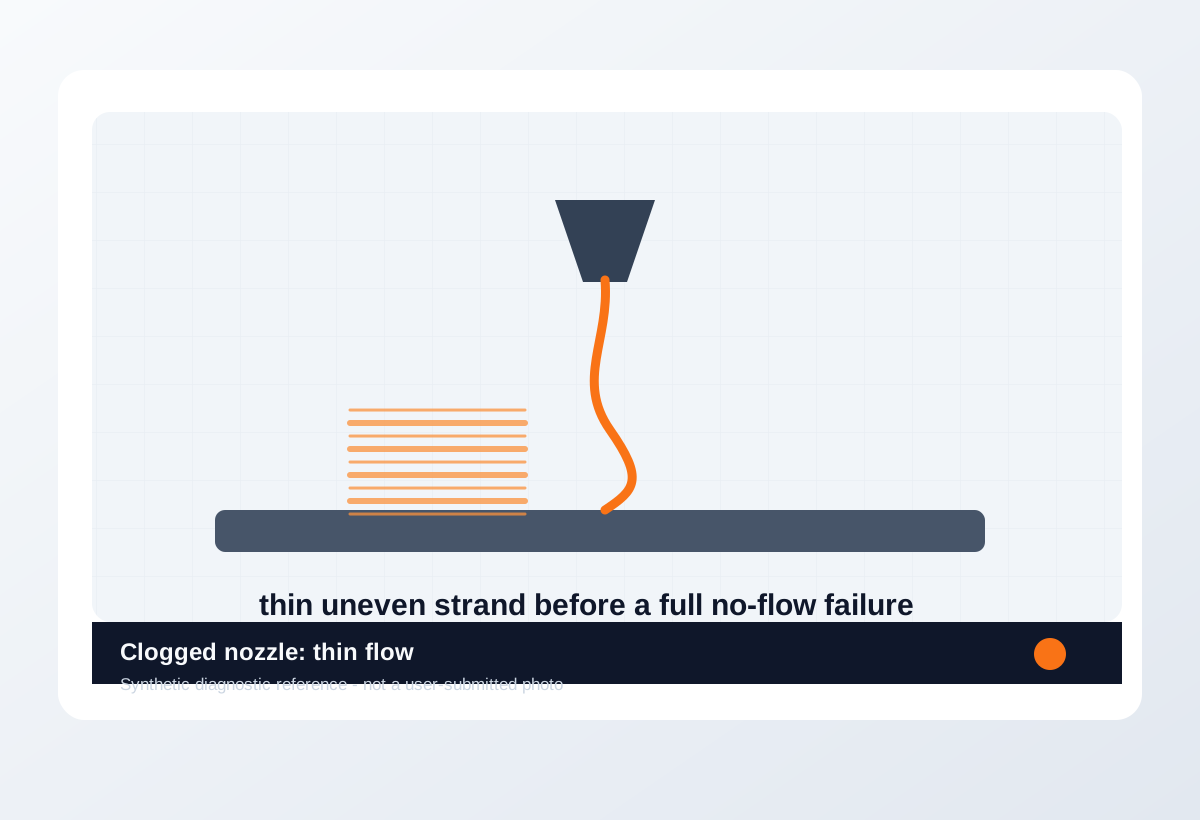
Visual diagnosis
Match the visible pattern before changing settings.
Original synthetic diagnostic reference plus licensed look-alike references; confirm with the test or log evidence below.
- Extruder clicks, strand curls upward, extrusion thins, or flow stops suddenly.
- Walls show missing lines or weak infill after feeding was previously normal.
- Issue may start after abrasive filament, heat soak, nozzle swap, or old filament.
- Poor first layer with good free-air extrusion is Z/plate, not clog.
- Random stringing with strong walls is heat/moisture/retraction first.
- Layer shift is motion hardware, not nozzle flow.
- Partial clog
- Heat creep
- Worn nozzle
- PTFE gap or hotend assembly leak
- Abrasive filament wear
- Spool path drag
- Are missing lines random or after retractions?
- Does extrusion curl as it exits nozzle?
- Any clicking/grinding marks on filament?
- Any nozzle buildup or heat block leak?
- Nozzle internal blockage
- PTFE tube gap
- Exact wear diameter
- Whether extruder tension is correct
Original visual references
Synthetic examples for fast pattern matching.
These are Print Fixes synthetic diagnostic references, not user-submitted photos. Use them to compare shape and location, then confirm with the test or log evidence on this page.
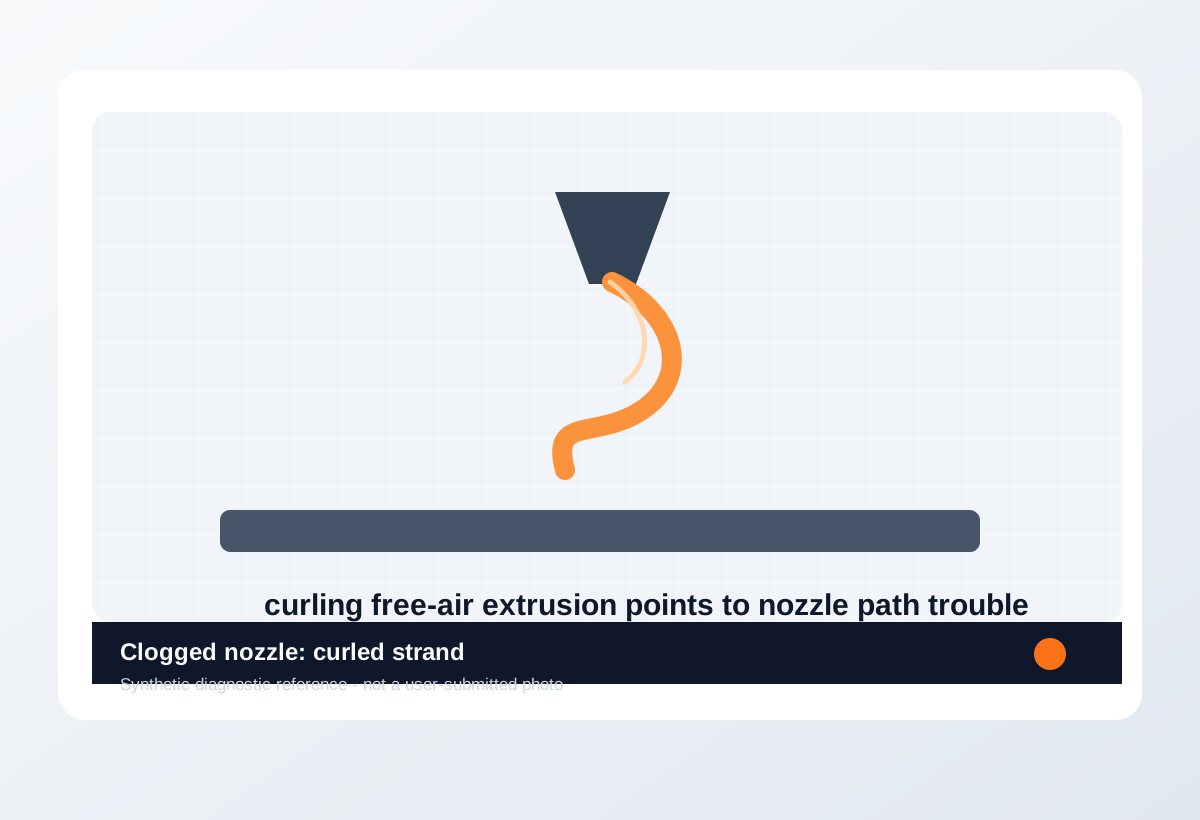
Licensed reference photos
Compare against real-world photos before changing settings.
These are externally licensed reference photos, not vendor images or scraped forum posts. Use them as pattern checks, then confirm with the small test model on this page.


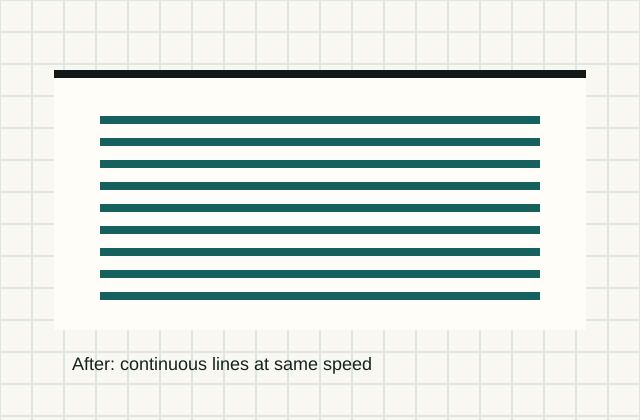
Before / after
Compare one small test, not a whole print.
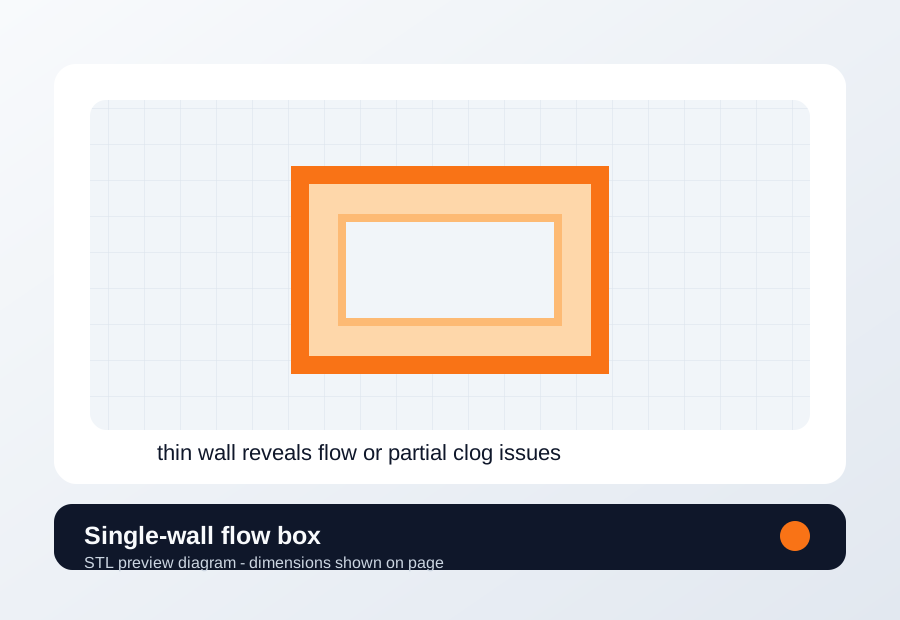
This is a look-alike reference, not proof of a clog. Confirm with free-air extrusion and the single-wall flow box.
Download a quick test
Single-wall flow box
Verify whether the nozzle and extruder can feed consistently before changing flow.
- File
- STL
- Typical time
- 10-18 min
- Material
- PLA for baseline after clearing; use the failed material if diagnosing material-specific clogging.
- Dimensions
- 35 x 35 x 25 mm.
- Footprint
- 35 x 35 mm
- Height
- 25 mm
- Layer height
- 0.20 mm unless the page says first-layer only
- Infill
- 10-15%
- Walls
- 1
- Supports
- Off
- Speed
- Use current profile for baseline, then change only the proven variable
- Same material
- Same nozzle temperature unless testing clearing temp
- Same flow value
- Same print speed unless testing volumetric limit
- Use one wall and no infill if your slicer supports it.
- Keep temperature fixed while checking flow consistency.
- Measure only after the filament path is mechanically clear.
Recommended Checks
0/4 doneVerification
- Plastic exits straight down in a smooth strand at normal temperature.
- The extruder no longer clicks or grinds during slow manual extrusion.
- A short single-wall print has continuous lines with no sudden gaps.
Field guide
Follow the branch that matches your print
Free-air extrusion curls, thins, or exits sideways
- Likely cause
- Partial clog or debris in nozzle.
- First test
- Heat to material temp and extrude slowly into free air.
- Change only this
- Clear nozzle path with cold pull/cleaning or nozzle swap if needed.
- Verify with
- Free-air strand drops straight and full-size.
- Stop when
- Strand is consistent and single-wall test prints cleanly.
Flow starts OK then fades/clicks after heat soak
- Likely cause
- Heat creep or filament softening too high in the path.
- First test
- Run short extrusion after idle heat soak and inspect hotend fan/path.
- Change only this
- Hotend cooling/path temperature issue, not slicer flow.
- Verify with
- Extrusion remains stable after heat soak.
- Stop when
- Clicking no longer appears after idle/slow print.
Abrasive filament printed through brass and holes/walls are oversized or inconsistent
- Likely cause
- Nozzle is worn, not simply clogged.
- First test
- Compare extrusion/wall width with a known-good nozzle or inspect nozzle history.
- Change only this
- Replace with hardened/wear-resistant nozzle for abrasive materials.
- Verify with
- Single-wall width and surface become consistent.
- Stop when
- New nozzle restores stable width.
Under-extrusion after nozzle or PTFE work
- Likely cause
- PTFE gap, nozzle seating issue, or hotend leak creates drag/debris.
- First test
- Inspect hotend assembly for gap/leak using printer maker procedure.
- Change only this
- Reseat nozzle/PTFE/hotend interface.
- Verify with
- Free-air extrusion and single-wall box are stable.
- Stop when
- No leak/debris returns after heat cycle.
Extruder grinds but free-air strand is clean after reload
- Likely cause
- Spool drag, extruder tension, or filament path resistance.
- First test
- Pull filament path by hand and run free-air extrusion with spool path isolated.
- Change only this
- Spool/path drag or extruder grip.
- Verify with
- No grinding during single-wall flow box.
- Stop when
- Extrusion stays clean without raising flow.
Concrete Parameter Range
| Setting | Start | Range | Change when | Stop when | Too far looks like |
|---|---|---|---|---|---|
| Free-air extrusion speed | Slow manual extrusion | 20-50 mm filament at slow feed | Strand curls, thins, or clicks | Strand drops mostly straight and full-size | Forcing fast extrusion can skip even on a healthy hotend. |
| Nozzle temperature for clearing | Material normal print temp | +5 to +10 C only for clearing if safe for material/hotend | Residue softens poorly at normal temp | Flow clears and normal temp works again | Too hot can degrade filament and create more residue. |
| Print speed / volumetric repeat | Current profile | Reduce 20-30% for one single-wall test | Free-air flow is clean but print still under-extrudes | Walls become continuous at realistic speed | Too slow hides a worn nozzle or path drag problem. |
| Retraction after clog | Profile default | Use normal material range; avoid aggressive increases | Clogs follow heavy travel/retraction sections | No clicking after travel and restarts are full | Too much retraction can trigger heat creep or jams. |
| Nozzle replacement threshold | Clean existing nozzle first | Replace when cleaning fails, abrasive wear is likely, or opening is damaged | Same clog/wear repeats after clearing | New correct nozzle restores consistent single-wall extrusion | Replacing parts before diagnosis can hide PTFE or extruder issues. |
Material / Machine Differences
Wrong Turns
Stop tuning when
Do not keep chasing perfection after the signal is clear.
- Free-air strand is straight and stable.
- Single-wall flow box prints continuous walls.
- Extruder stops clicking/grinding under the same material.
- A clog returns after clearing, pointing to hotend assembly or filament path.
Common setups
Jump to the branch that matches your machine or material
Copy before changing more settings
Clogged-nozzle diagnostic brief
Fill this out after the first test so the next branch is based on evidence, not memory. The useful case is the one where only one variable changed.
Printer:
Slicer:
Firmware:
Material:
Nozzle size/material:
Bed surface:
Exact symptom:
Recent change:
First test run:
One change tested:
Result:
Next branch:Still not matching?
Jump to the next likely diagnosis
Problem Pattern
Clogs often follow a material change, abrasive filament, old PLA cooked in the nozzle, a cold pull gone wrong, or printing too cool for the requested flow.
Likely Causes
- Burnt residue, dust, or material contamination inside the nozzle.
- Abrasive or filled filament has worn the nozzle opening.
- Heat creep softened filament above the melt zone and jammed the path.
- Nozzle, heatbreak, or PTFE path is assembled with a small gap that traps plastic.
Print Context
- Applies to
- FDM hotends, brass nozzles, hardened nozzles, filled filament
- Best first move
- Confirm flow into free air before replacing the nozzle.
- Do not start with
- Extruder tension changes when the nozzle cannot pass plastic.
After the test
Use the result, do not keep changing random settings.
If one check clearly changes the print, repeat that exact test once before moving on. If nothing changes, switch diagnosis instead of stacking more slicer edits.
Only after the evidence points here
Parts and supplies for the proven branch
Nozzle and cleaning kit
Run a hot extrusion or cold-pull check, then print a small flow wall with the same filament and temperature.
- Buy signal
- Extrusion curls, skips, or stays inconsistent after cleaning, or a brass nozzle has seen abrasive filament.
- Skip if
- The problem is only first-layer Z, bed mesh, or wet filament.
- Save evidence
- Free-air extrusion photo, cold-pull result, nozzle size/material, filament type, and whether flow changed after cleaning.
Replace the nozzle only after the extrusion path test makes the blockage or wear visible.
- Correct nozzle thread and length
- Brass for normal PLA/PETG
- Hardened steel or similar only for abrasive filaments
- Cleaning needles sized for the nozzle
- Hardened nozzles as a first-layer fix
- Random nozzle packs that do not match the hotend
Filament dryer or dry box
Print the same small stringing or surface test before and after a controlled dry cycle, without changing slicer values.
- Buy signal
- Popping, steam marks, rough surface, weak layers, or fine hairing improves on the same spool after drying.
- Skip if
- The spool prints clean after a simple temperature step or seam move.
- Save evidence
- Before/after photo, material, drying temperature/time, room humidity if known, and unchanged slicer settings.
Drying is a purchase only when moisture signs survive one controlled slicer change.
- Adjustable temperature
- Fan circulation
- Spool clearance for the material you use
- Print-while-drying path if TPU/PETG stays loaded
- Passive storage box for a spool that is already wet
- A dryer purchase when a 5 C temperature step fixed the stringing
Print Fixes may earn from qualifying purchases when commerce links are configured. Diagnostic steps stay independent: buy only when the failure evidence points to the part.
Warnings
- Nozzle and heater block work can burn skin; use the printer maker's hot-tightening and replacement instructions.
- Cleaning needles can damage small nozzles if forced sideways.
- Do not bypass thermal or heater warnings to push through a clog.
- A print that clearly shows clogged nozzle, especially if the same failure repeats.
- You want one next move instead of five profile edits.
- The printer is showing a firmware, heater, or electrical safety warning.
- You are copying numbers from a different printer as final values.
More traps to avoid
- Changing several slicer settings at once and losing the actual cause.
- Ignoring filament condition or bed cleanliness while tuning advanced values.
- Keeping one global profile for different materials, brands, colors, and nozzle sizes.
Bench Note
Page: Clogged Nozzle Fix
Printer / firmware:
Slicer profile:
Filament brand and material:
Nozzle size:
Bed surface:
Recent changes:
First check run:
One change tested:
Result:
FAQ
Is every under-extrusion issue a clog?
No. Check spool drag, extruder grip, temperature, and speed too, but a bad free-air strand strongly points to a nozzle or hotend restriction.
Can I just raise temperature?
A small temperature increase can help diagnosis, but it should not become a workaround for debris, assembly gaps, or a worn nozzle.
When should I install a hardened nozzle?
Use hardened or other abrasion-resistant nozzles when printing carbon fiber, glow, glass-filled, or other abrasive materials.